SpaceX Launch to the International Space Station

Spacex launch

The Purpose

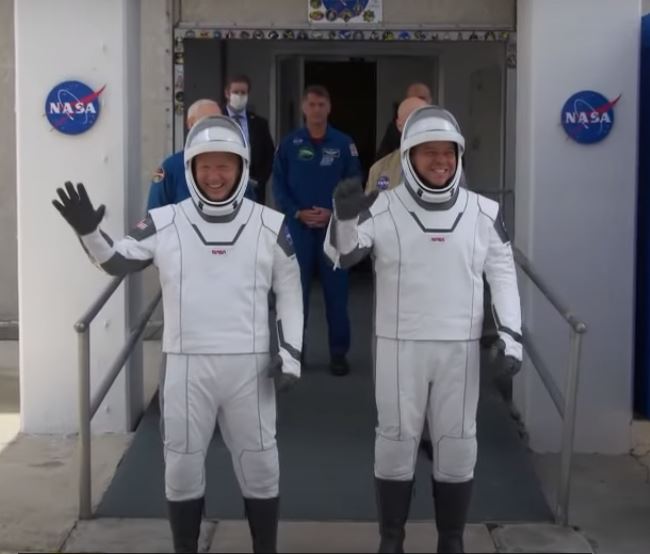
The SpaceX launch today, known as Demo-2, will once again permit the US to send humans into space.  Astronauts Robert Behnken and Douglas Hurley will take off for the International Space Station at 3:22 p.m. EDT May 30, from Launch Complex 39A in Florida.  The SpaceX launch can be viewed live on NASA-TV

The rocket launch today will lay the groundwork for future exploration of the Moon and Mars, starting with NASA’s Artemis program, which aims to land the first woman and the next man on the lunar surface in 2024.

According to NASA, the Demo-2 mission is intended to demonstrate the ability of SpaceX to ferry astronauts to the International Space Station and back safely. The aim is to get the “Crew Dragon” astronaut carrier certified for more long-term manned missions into space.  

The Launch
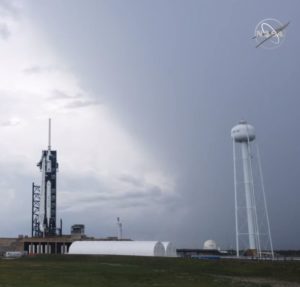
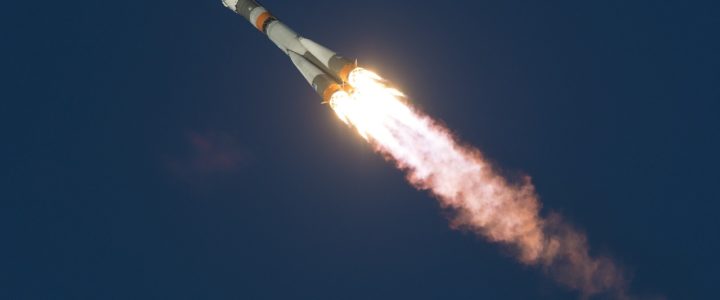
The SpaceX rocket will lift off from the Florida launchpad 39A and two astronauts will be aboard the specially instrumented Falcon 9 rocket.  The rocket launch will be the second attempt, as the first attempt was aborted due to a potential lightning strike.

The two astronauts, after docking with the International Space Station, will join the crew on the space station.   NASA news of the SpaceX launch can be followed on the NASA website. After launch, the SpaceX mission will be monitored and controlled from the Johnson Space Centre in Houston Texas.

The Mission

The spacecraft has been built by the SpaceX company owned by billionaire entrepreneur Elon Musk. The rocket launch today will be the first time that such a mission has been attempted by a privately owned company.  

The journey to space will take around 10 minutes. After about two minutes, the rocket will separate into a first-stage and a second-stage. The first stage will return to a SpaceX landing ship in the Atlantic Ocean whilst the second stage will continue the journey with the Crew Dragon capsule on board.  

The capsule will then separate from the second-stage and travel at 17,000 mph before being in position to rendezvous and dock with the Space Station, 24 hours later.

The Return

On conclusion of the mission, Crew Dragon will autonomously undock with the two astronauts on board, leave the space station and re-enter the Earth’s atmosphere. Upon splashdown just off Florida’s Atlantic Coast, the crew will then be picked up at sea by SpaceX’s Go Navigator recovery vessel and return to Cape Canaveral.

The Future

Earth from Moon

The Demo-2 mission will be the final major step before NASA’s Commercial Crew Program certifies Crew Dragon for operational, long-duration missions to the Space Station.

This certification and regular operation of Crew Dragon will enable NASA to continue the important research and technology investigations taking place on board the station. 

Read more about the Artemis program

The Chinese Chang’e 4 Lunar Mission

China Lunar Rover

The Chinese Chang’e 4 Lunar Mission is a robotic spacecraft mission, being part of the second phase of the Chinese Lunar Exploration Program.  It achieved the first soft landing on the far side of the Moon on 3rd January 2019.  

The far side of the moon, China space mission
The Far Side of The Moon

The mission is the follow-up to Chang’e 3, the first Chinese landing on the Moon.  Like its predecessors, the mission is named after Chang’e, the Chinese Moon goddess.  The spacecraft was originally built as a backup for Chang’e 3 and became available after Chang’e 3 landed successfully in 2013. The configuration of Chang’e 4 was adjusted to meet new scientific and performance objectives. 

Chinese Lunar Lander

The Chang’e 4 mission was first scheduled for launch in 2015 as part of the second phase of the Chinese Lunar Exploration Program. But the adjusted objectives and design of the mission created delays, and the launch did not happen until 7th December 2018.

The spacecraft entered lunar orbit on 12th December 2018 and the orbit’s perilune was lowered to 15 km (9.3 mi) on 30th December that year.  

The Landing Module touched down on 3rd January 2019 at 02:26 UTC, shortly after lunar sunrise over the Von Kármán crater in the large South Pole-Aitken basin.

The Stages of The Chang’e 4 Lunar Mission

Stage 1             A communication relay satellite, Queqiao, was first launched to a halo orbit near the Earth–Moon L2 point in May 2018.  

China Lunar Rover

Stage 2             The robotic lander and Yutu-2 rover were launched on 7th December 2018

Stage 3            The spacecraft entered lunar orbit on 12th December 2018

Stage 4            Landing on the Moon’s far side on 3rd January 2019

The Phases of The Chinese Lunar Exploration Program 

The Chinese Lunar Exploration Program was designed to be conducted in four phases of increasing technological advancement:

The first phase was simply reaching lunar orbit, a task completed by Chang’e 1 in 2007 and Chang’e 2 in 2010.

The second phase was landing and roving on the Moon, as Chang’e 3 did in 2013 and Chang’e 4 did in 2019.

The third phase is collecting lunar samples from the near-side and sending them to Earth, a task for the future Chang’e 5 and Chang’e 6 missions.

The fourth phase consists of development of a robotic research station near the Moon’s south pole.  The program aims to facilitate a manned lunar landing in the 2030s and possibly build an outpost near the south pole.  

This mission will attempt to determine the age and composition of an unexplored region of the Moon, as well as develop technologies required for later stages of the program.

Read more about Lunar Exploration

Welcome to “Artemis Day”

Artemis Rocket

“The Most Powerful Rocket Ever Built in Human History”… the rocket that will take humans to the Moon and beyond.

Jim Bridenstine

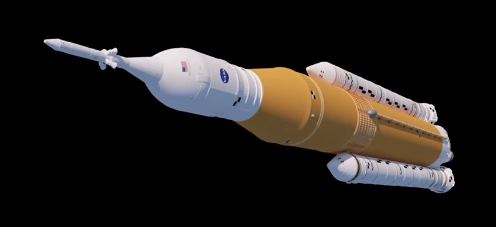
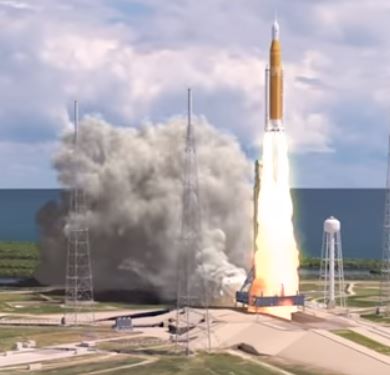
At NASA’s Michoud Assembly facility, located in New Orleans and known as “America’s Rocket Factory”, sits the largest rocket built since the Apollo Program.  The construction phase is now complete and on 9th December 2019, Jim Bridenstine, NASA Administrator, revealed the 212-foot rocket core stage.  This rocket will become the power source that will project the first Artemis mission into space. 

Artemis Project

The rocket will form part of the “Space Launch System” that will provide the power for Astronauts of the future to travel to destinations far into the solar system and explore other worlds close-up.

NASA is now working towards the exciting goal of landing the first woman on the Moon by 2024, just four years away.

Australia’s Space Exploration Program

Artemis

Dr. Christyl Johnson is NASA Goddard Space Flight Centre’s deputy director for technology and research investments. She manages the research and development portfolio and is responsible for formulating future technology goals and leading an integrated program of investments aligned to meet those goals.

Dr. Christyl Johnson

In a recent visit to Australia, Dr Johnson was asked about Australia’s role in NASA’s resurgent Space Program which includes putting the first woman on the moon as well as manned exploration of the planet Mars.

Returning to the moon will involve “bringing all the best and brightest ideas to the table at the same time.  When you bring all the resources together, there is nothing that’s impossible.”

Australia’s Involvement in exploring space

Australia has been involved since the beginning of the Apollo program and has many opportunities to contribute.

We now have laser communications that will make it possible for large amounts of data to be streamed back from Mars.  As we explore the caves and tunnels on Mars, children on Earth will be able to observe in real time.

How difficult will it be to build a space industry in Australia?

Dr Johnson says that Australia has many start-up companies that will have opportunities to direct their research and productivity towards the space program.

Dr Johnson says that the program will open up “a whole world of possibilities.”