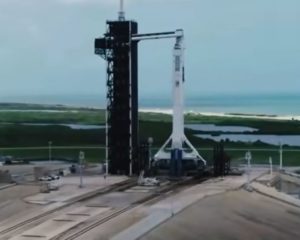
NASA’s Nancy Grace Roman Space Telescope launched Aug. 30 aboard a SpaceX Falcon Heavy rocket from the agency’s Kennedy Space Center in Florida. The telescope then began a three-month, one-million-mile journey to its final orbit at the Sun-Earth Lagrange Point 2.
planets in order
NASA will release the first images from the Nancy Grace Roman Space Telescope during a live broadcast featuring agency leadership at 3:30 p.m. EST on Monday, Dec. 7, 2026
With its wide field of view and powerful infrared vision, Roman will survey vast regions of the sky while probing deep into cosmic history. In addition to advancing research on dark matter, dark energy, and exoplanets, the mission’s large-scale surveys will support a wide range of astronomical investigations beyond its primary science objectives.
The images will showcase Roman’s groundbreaking scientific capabilities as the observatory prepares to deliver deep, panoramic views of the universe unlike any seen before. These observations will help scientists investigate some of the biggest mysteries in astrophysics, including dark energy, dark matter, and worlds beyond our solar system.
Both programs aim to land humans on the Moon, but they’re built for different eras, tech, and goals.
Buzz Aldrin stepping onto the Moon, taken by Neil Armstrong after landing on the moon
Here’s how they stack up:
1. Mission goals & scope
Apollo (1961-1972): A Cold War “space race” to beat the Soviets. Goal was to land a man on the Moon and return him safely, proving U.S. dominance. Missions were short flags-and-footprints trips.
Artemis (2022–present): Designed for long-term, sustainable presence. Goal is to land the first woman and first person of color on the Moon, establish the Gateway lunar space station, and use the Moon as a stepping stone for Mars. Artemis missions are built for longer surface stays and resource exploration.
2. Vehicles & rockets
Apollo
Artemis
Launch rocket
Saturn V
Space Launch System (SLS)
Thrust
33.8 million newtons
39.1 million newtons – 15% more than Saturn V
Stages
3 stages
1.5 stages
Crew capsule
Command Module
Orion crew module
Crew capacity
3 astronauts
4 astronauts
Habitable space
5.95 m³
9 m³
Mission duration
Up to 14 days
Up to 21 days
3. Technology & computers
Apollo: One flight computer, 75% heavier than just one of Orion’s four redundant systems. Had 128,000x less memory and was 20,000x slower. Software only calculated trajectory, no real-time adjustment. Didn’t account for radiation because missions flew during solar minimum.
Artemis/Orion: Four redundant flight computers, modern avionics, and autonomy. Software adjusts trajectory in real-time and automates functions so astronauts can focus on other tasks. Electronics are radiation-hardened.
4. Crew & culture
Apollo: All-male, all-American crews. Launch teams were primarily men.
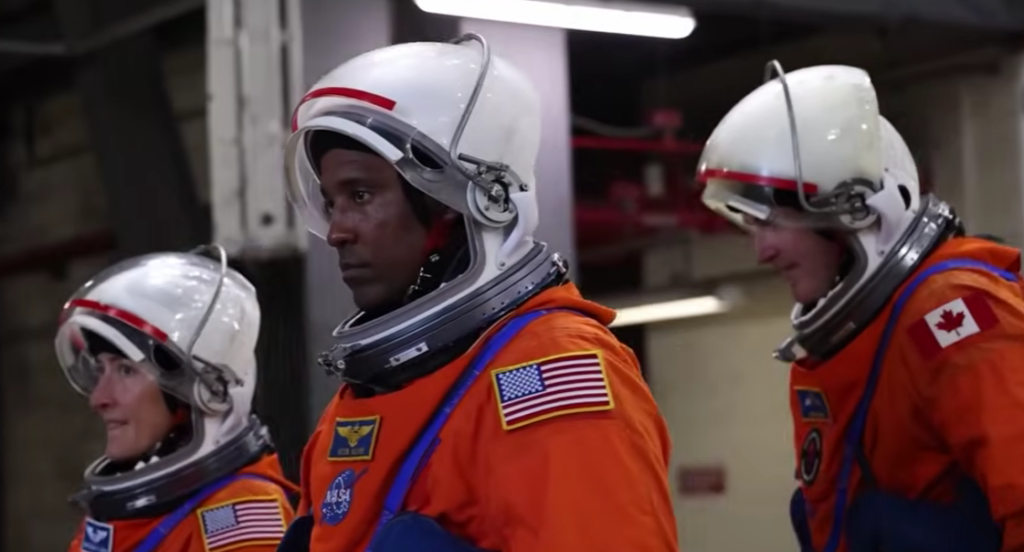
Artemis: Intentionally more representative. Artemis will land the first woman and first person of color. The launch team is now ∼30% women, including the first woman launch director. Artemis II crew includes a woman, person of color, and a Canadian.
5. Lunar operations & science
Apollo: Short stays, up to 12 days. Used the Apollo Lunar Surface Drill and Lunar Roving Vehicle on later J-missions.
Artemis: Designed for longer surface missions. New tech like the TRIDENT drill will sample regolith and hunt for ice/resources to support sustained presence. Gateway station adds an orbital outpost to coordinate vehicles.
6. Pace & approach
Apollo: Went from first U.S. astronaut to Moon landing in 8 years. Very fast, risk-accepting.
Artemis: Much slower after decades of shifting priorities between Moon and Mars. SLS flew uncrewed once in 2022. Artemis II will be the first crewed flight, a lunar flyby like Apollo 8, before a landing on Artemis III or IV.
Firefly’s Blue Ghost Mission 1, named Ghost Riders in the Sky, launched from pad 39A at NASA’s Kennedy Space Center in Florida, at 1:11 a.m. EST on January 15, 2025. Blue Ghost separated from the SpaceX Falcon 9 rocket in a highly elliptical Earth orbit at 2:17 a.m. EST and established communications with Firefly’s Mission Operations Center in Cedar Park, Texas, at 2:26 a.m. EST.
Mission Summary
Blue Ghost Mission 1 will deliver 10 science and technology instruments to the lunar surface as part of NASA’s Commercial Lunar Payload Services (CLPS) initiative. Upon launching on January 15, Blue Ghost is spending approximately 45 days traveling to the Moon, allowing ample time to conduct health checks on each subsystem and begin payload science. Blue Ghost is set to land in Mare Crisium on March 2 and operate payloads for a complete lunar day (about 14 Earth days). On March 14, Firefly expects to capture high-definition imagery of a total eclipse when the Earth blocks the sun above the Moon’s horizon. Blue Ghost will then capture the lunar sunset on March 16, providing data on how lunar dust levitates due to solar influences and creates a lunar horizon glow first documented by Eugene Cernan on Apollo 17. Following sunset, Blue Ghost will operate several hours into the lunar night.
Standing 2 m (6.6 ft) tall and 3.5 m (11.5 ft) wide, Blue Ghost is designed for stability with shock absorbing feet, a low center of mass, and a wide footprint. Blue Ghost’s core components, including the panels, struts, legs, harnesses, avionics, batteries, and thrusters, were built using many of the same flight-proven technologies common to all of Firefly’s launch and orbital vehicles, enabling lower costs and improved reliability.
With the establishment of NASA in 1958, eight main objectives were set for the new space agency. According to NASA, these included, “the expansion of human knowledge of phenomena in the atmosphere and space,” along with, “the development and operation of vehicles capable of carrying instruments, equipment, supplies and living organisms through space.”
Also listed as a primary objective
was, “the preservation of the role of the United States as a leader in
aeronautical and space science and technology and in the application thereof to
the conduct of peaceful activities within and outside the atmosphere.”
The first images from The James Webb space telescope are about to be revealed! These images will be in Full Color.
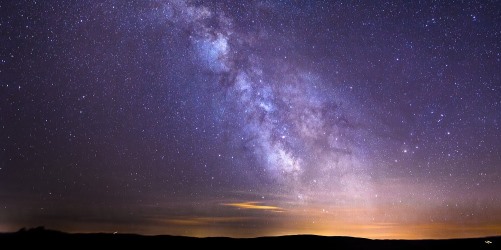
The Milky Way Galaxy
The images will demonstrate the Webb telescope’s full capabilities. It will soon be ready to reveal infrared images never before seen from the outer universe.
The images will reveal some of the earliest galaxies and stars that formed after the Big Bang, 13.8 billion years ago.
The images will be released one-by-one during a televised broadcast beginning at 10:30 a.m. EDT on Tuesday, July 12, from NASA’s Goddard Space Flight Center in Greenbelt, Maryland.
Live coverage of the image release broadcast will air on NASA TV, the NASA app, and the agency’s website.
The public also can watch live on Facebook, Twitter, YouTube, Twitch, and Daily Motion.
During a total lunar eclipse, the earth’s shadow falls across the moon’s face as the earth moves between the moon and the sun, and the moon is completely covered by earth shadow. The moon and the sun will then be lining up on exactly opposite sides of our planet.
This will be a total eclipse of the full moon and will also be a Super Moon which is when the moon is at its closest point to the earth. The moon will pass through the earth’s shadow. The earth’s shadow is made up of two cone shaped components. The outer shadow is where the earth blocks part of the sun’s rays while the inner shadow, known as the umbra, is where the earth blocks all direct sunlight from reaching the moon.
According to NASA, if you make a point of watching the event tonight you may be in for a treat. A total eclipse of the moon can often be a beautiful and interesting event. There can be a number of secondary phenomena, especially during the time that the moon is entering and then emerging from the earth shadow. This is why it is called a “Super Flower Blood Moon”.
When to see the Total Lunar Eclipse
The blood moon stage will occur at peak totality, which tonight will be at 11:16 GMT.
Total Lunar Eclipse May 26, 2021
The total lunar eclipse will be fully visible along the East Coast of Australia. The event will begin at 6:47 PM Brisbane time and reach the maximum eclipse at 9:18 PM Brisbane time. The eclipse will finish at 11:49 PM and the total duration will be 5 hours and two minutes.
NASA’s Perseverance rover is about to guide itself to the surface of Mars in the most precise landing operation yet undertaken.
Every process must take place without error and precisely on time, in order for the landing to succeed.
The descent is scheduled to take place today on the 18th February 2021 at 3:55 pm American Eastern Standard Time.
Perseverance will be the fifth rover to land on the red planet. The spacecraft is on target to touch down in Jezero Crater. It’s mission will be to scientifically discover whether there were ever any lifeforms on the surface of Mars.
“Jezero Crater is the most challenging Martian terrain ever targeted for a landing”.
Thomas Zurbuchen, associate administrator for the Science Mission Directorate at NASA Headquarters
It’s landing day for Perseverance and all eyes are on the Red Planet.
The rover spent the last seven months flying the roughly 125-million-mile (202 million kilometers) distance to Mars on a quest to find signs of ancient life. Later today (Feb. 18), the mission will begin a daring “seven minutes of terror“-type descent, and if all goes well, its wheel touchdown will signal the beginning of the most powerful rover yet to roam the Martian surface.
Perseverance will broadcast information back in high-definition 4K, set aside promising rock samples for a sample-return mission and launch the first interplanetary helicopter — all the while photographing, laser-targeting and investigating targets in the ancient delta of Jezero Crater.
Jupiter and Saturn have been travelling across the sky together this month but right now they are really putting on a show. You can see them in the western sky, very low, each evening for an hour after sunset. A conjunction will occur every 20 years this century but this one is called a “great conjunction”.
On 21st December 2020, the two planets were approximately 1/10 of a degree apart. They will not appear this close in the sky again until the year 2080.
The last time that these two planets were visible across the earth was on 5th March in the year 1226, when they were even closer compared to what we will see this year.
If you have binoculars or a small telescope you will be able to see both Jupiter and Saturn along with Jupiter’s moons.
If you would like to see the moons of Jupiter, train your telescope on Jupiter that night, and if there are no clouds, three of the four famous Galilean satellites will be visible. The moons of Jupiter that will be visible are Callisto, Io and Europa.
On one side of Jupiter, you’ll see its volcanic moon, Io (closest to Jupiter’s disk) and second-largest moon, Callisto. On the other side of Jupiter will be Ganymede, Jupiter’s largest moon. As for Europa, it will be in transit, crossing in front of Jupiter, so cannot be seen.
This could be a “once in a lifetime opportunity” to see the Great Conjunction of the planets Saturn and Jupiter. The planets will be visible until the end of January 2021.
In this photo, taken with a cell phone in Australia, the two planets can be clearly seen
On 30th May 2020, two NASA astronauts climbed inside a Crew Dragon space capsule and launched on top of a Falcon 9 rocket to fly to the International Space Station.
An Historic Mission
This SpaceX Falcon 9 rocket launch was historic for three main reasons…
1 They were the first astronauts to launch from American soil in nearly a decade.
2 Commercial companies are now in charge of both the design and production of space vehicles.
The vehicle was commercially made by the company SpaceX and not by NASA. It was the culmination of NASA’s commercial crew program, and the first time a private company has ever launched humans into orbit. Commercial companies are now in charge of both the design and production of space vehicles.
3 But the primary significance of this mission is that the US will no longer have to rely on Russia to get astronauts to and from the International Space Station.
This could be the beginning of a very different era of human spaceflight.
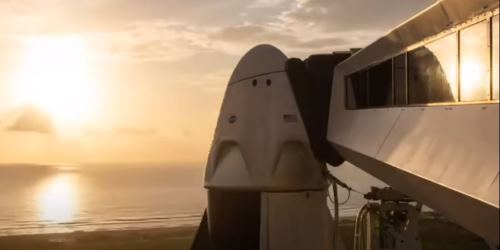
The mission had a very different look from the space flights of the past. SpaceX’s new crew capsule is called the Crew Dragon. It is designed specifically to launch on top of SpaceX’s Falcon 9 rocket. Its chief purpose is to ferry people to and from low earth orbit.
The new capsule is fitted out with life support systems, sleek chairs and shiny touchscreen displays. The astronauts’ custom-designed pressure suits are designed to keep them safe from the harsh environment of space if there is an emergency. The astronauts control the crew dragon through their special touchscreen gloves.
SpaceX Automated Control Systems
The ISS (International Space Station) docking system, built into the capsule, is entirely automatic. Using a sophisticated system of sensors and cameras, the vehicle can approach the International Space Station completely autonomously, and latch onto an ISS docking port. (In 2019, the SpaceX spaceship, “Crew Dragon” flew unmanned to the International Space Station and docked automatically without any crew on board).
SpaceX can now use the capsule to create a new space tourism business. In fact, the program is intended to kick-start the commercial space flight industry.
What are the next steps?
First, the two astronauts need to finish their mission. Astronauts Robert Behnken and Douglas Hurley will spend a few weeks on board the International Space Station.
After that, they will climb back into the Crew Dragon and detach themselves from the space station. They will then make the perilous journey back to earth where a suite of parachutes will lower them gently into the ocean. They will then be retrieved by a SpaceX ship.
In the long term, this could become a standard operation for NASA, who are planning for private companies to build and deliver a Moon Lander vehicle onto the Moon.
This could be the beginning of a new space tourism program, commencing as early as 2021.